A few millimetres may not sound like much.
But around a window, they can make the difference between a blind that looks properly finished and one that never quite sits right.
Custom window blinds Singapore homeowners choose should therefore begin with the window itself — its measurements, sunlight, privacy needs and the way the room is used.
A blind that is too narrow may leave noticeable gaps at the sides. One that is too wide may interfere with a window handle or surrounding cabinetry. And even when the measurements are right, the wrong fabric can leave a room brighter, warmer or less private than you expected.
That is why choosing custom window blinds in Singapore is about more than finding a colour you like.
It is about understanding the window, the light that comes through it and the way you actually live in the room.
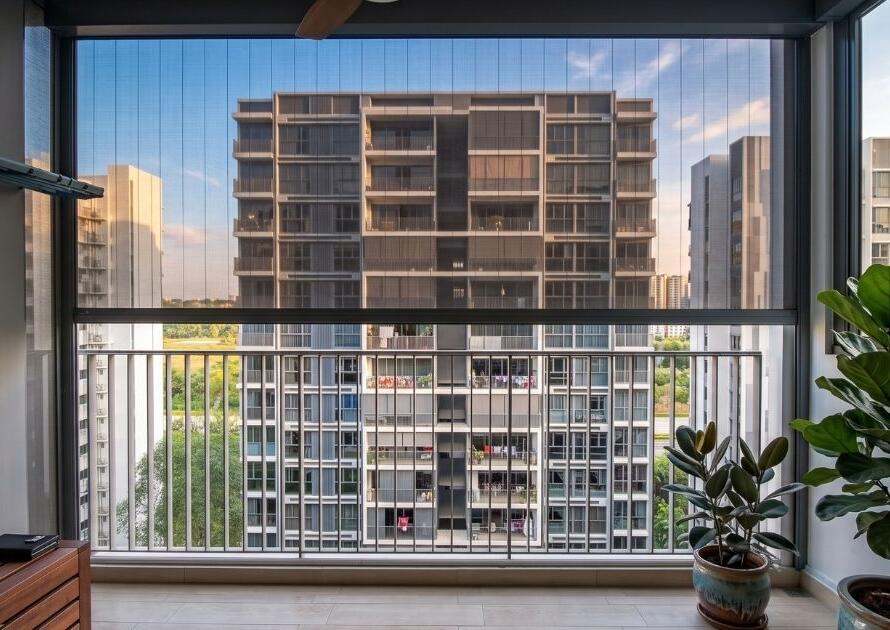
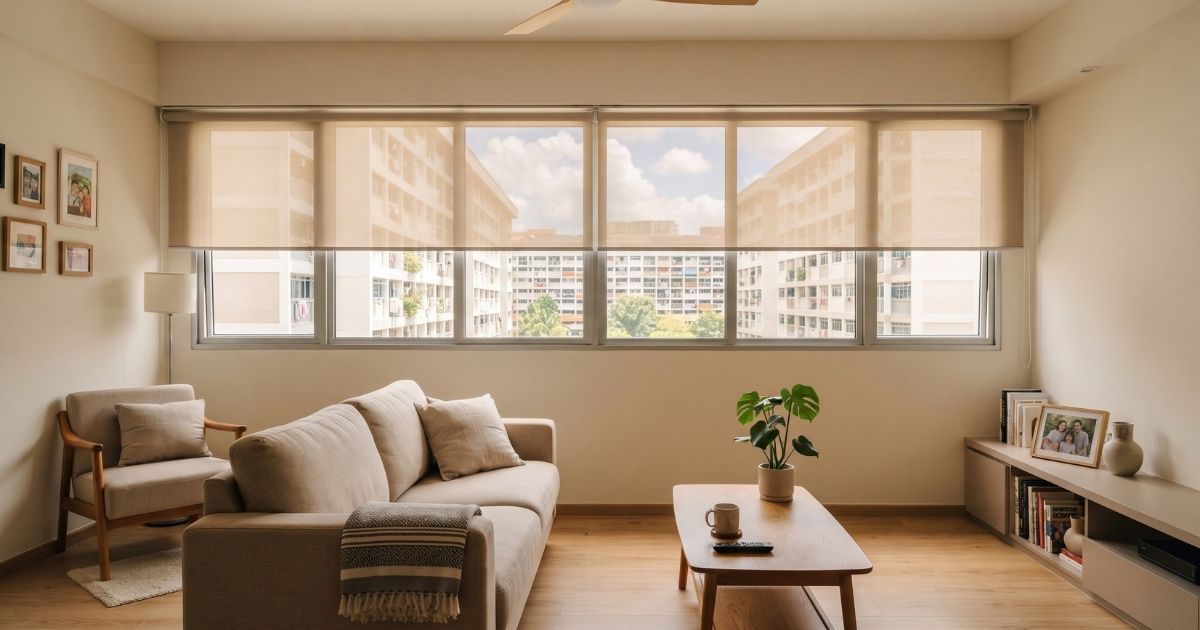
For a living room, that might mean softening strong afternoon glare without losing the view outside. In a bedroom, it may mean reducing early-morning light for better rest. And for a balcony, it could mean creating enough shade to make the space somewhere your family genuinely wants to spend time.
The right window furnishing should feel like it belongs there — measured carefully, chosen thoughtfully and fitted properly.
Why Custom Window Blinds Singapore Homes Need a Made-to-Measure Fit
No two homes — and sometimes no two windows — are quite the same.
An HDB living room may have a wide window beside built-in carpentry. A condominium may have full-height glass that brings in plenty of daylight along with afternoon glare. A landed home may have larger openings that call for a different approach altogether.
That is where made-to-measure blinds matter.
Instead of starting with a standard blind size and trying to make the window fit it, custom blinds are measured around the actual opening.
The width and height matter, of course. But so do the smaller details: the window frame, handles, recess depth, surrounding furniture or cabinetry, mounting position and the clearance needed for the blind to operate properly.
These details are easy to overlook.
They are also often what determines whether the finished installation looks considered or simply added on.
Privacy is another reason to get the fit right. Gaps around a blind can become much more noticeable after dark, particularly when the lights inside your home are switched on.
Custom does not mean choosing the most elaborate or expensive option for every room. It simply means choosing something appropriate for the window and the way the room is used.
Sometimes, the simplest solution is the right one.
Start With the Room, Not the Blind
Before looking at fabrics and colours, spend a little time noticing what happens in the room.
When does the sunlight enter?
Where does the glare fall?
Do neighbouring units overlook the window?
Do you want to keep your daytime view?
And when the blind is closed, how dark or private do you actually want the room to feel?
These questions usually tell us more than a catalogue can.
A west-facing living room, for example, can become uncomfortable later in the day when direct sunlight reaches the sofa or reflects from the television.
A Sunscreen Roller Blind may help soften glare while maintaining some outward visibility. If you need stronger light reduction, Dimout or Blackout fabric may be more appropriate.
Bedrooms often need something different. If reducing light for sleep matters most, stronger light-control fabrics make sense. If you prefer a softer room that changes naturally through the day, a more adjustable solution may feel better.
There is no single blind that is right for every room.
And there does not need to be.
Which Window Blind Is Right for Your Home?
Roller Blinds: Simple, Clean and Easy to Live With
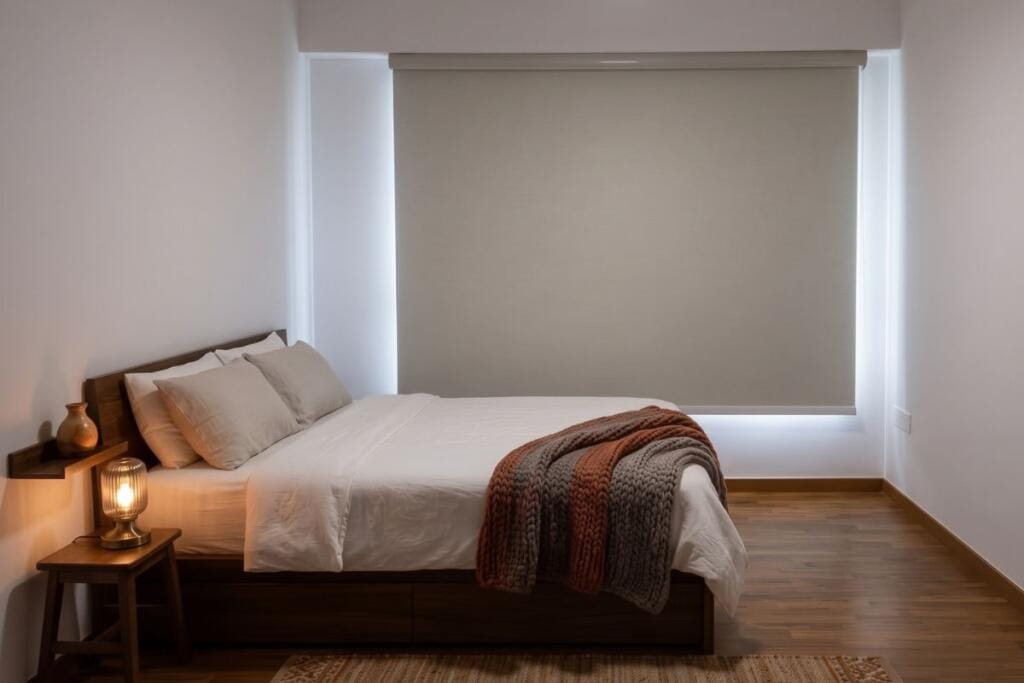
Roller Blinds are one of the simplest ways to bring practical light control into a Singapore home.
Their clean profile works comfortably across bedrooms, living rooms and studies without asking for too much visual attention.
At Cornerstone 317, Roller Blinds are available in three main fabric types:
Sunscreen helps filter glare and heat while allowing you to retain an outward view during the day.
Dimout softens and reduces daylight without making the room completely dark.
Blackout provides the strongest light reduction and is particularly suited to bedrooms and spaces where darkness matters.
The system can also be motorised for windows where additional convenience is helpful.
If you like things uncomplicated — something that works quietly and sits neatly within the room — Roller Blinds are often a good place to begin.
Korean Blinds: A Softer Way to Dress the Window
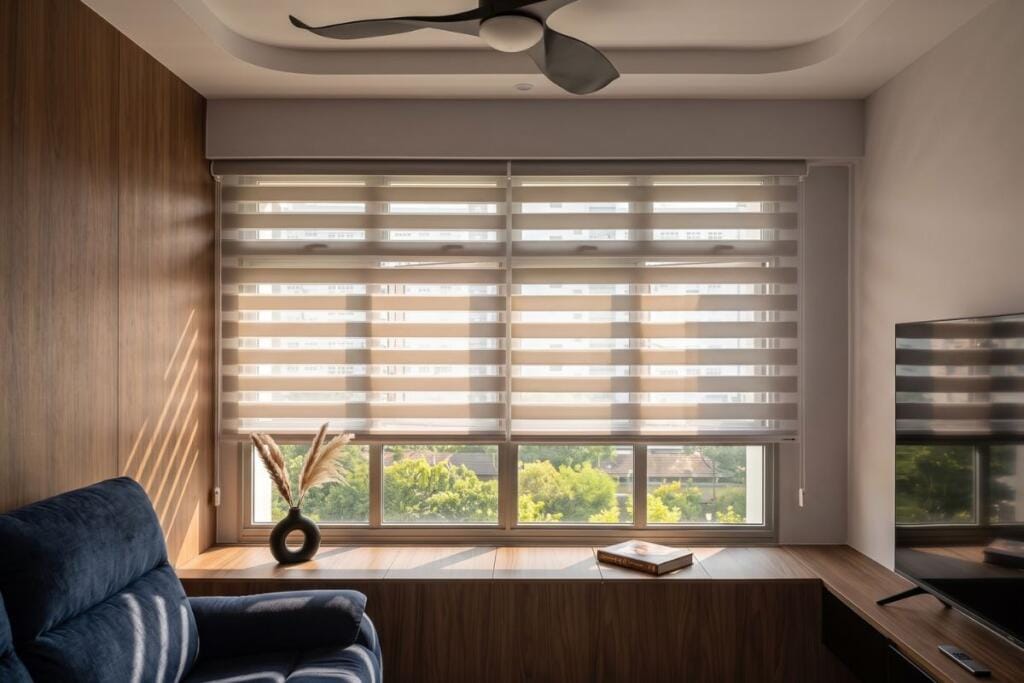
If you like the softness of fabric but want something neater than full curtains, Korean Blinds offer a gentler alternative.
Unlike a standard single-layer roller blind, Cornerstone 317’s Korean Blinds use a double-layer fabric construction. When raised, the fabric gathers into fuller, softer folds.
That gives the window a warmer, more tailored appearance.
They are available in Dimout and Blackout options.
One important detail is worth knowing before you choose: Cornerstone 317’s Blackout Korean Blinds provide strong light reduction, but they are not intended to create 100% total darkness. Some light can still enter, particularly around the edges.
For homeowners who need stronger blackout performance, Blackout Curtains may be worth considering instead.
Choosing well sometimes means knowing what a product does not do, too.
Venetian Blinds: More Control Without Closing the Room
Sometimes you do not want the window fully open or fully covered.
You just want the light to behave.
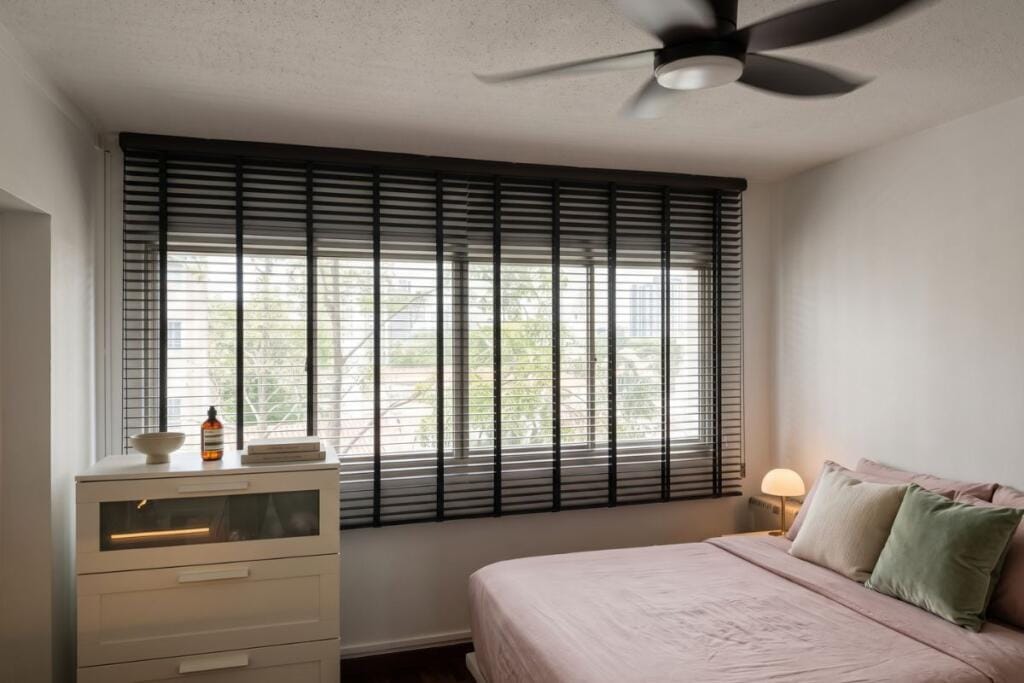
Venetian Blinds give you that flexibility through adjustable horizontal slats. Tilt them one way for more daylight, another for greater privacy, or close them when you want stronger coverage.
Cornerstone 317 offers real wood and faux-wood PVC Venetian Blinds.
Real wood brings natural grain and warmth into a room and can suit spaces with stronger heat and sun exposure.
PVC faux-wood offers a similar visual character while generally being better suited to spaces where moisture and humidity are greater.
Both give you something fabric blinds cannot offer in quite the same way: the ability to fine-tune light and privacy without necessarily raising the blind.
Curtains: When You Want More Softness
Not every window needs a blind.
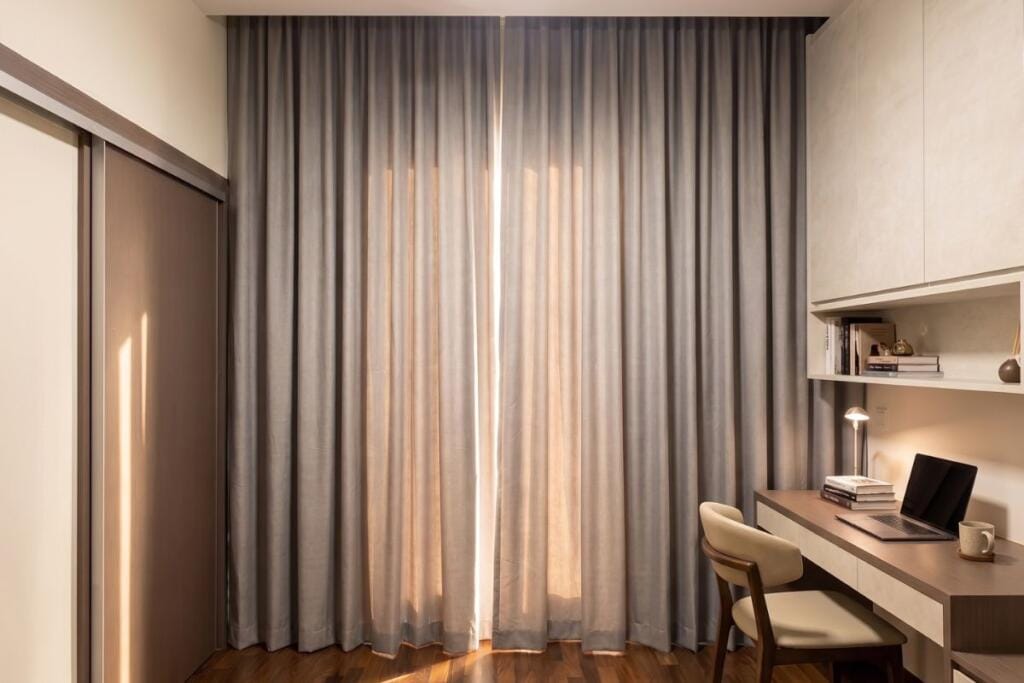
For bedrooms and living areas where you want the window furnishing to become a larger part of the interior, made-to-measure curtains bring softness that a blind naturally cannot.
Cornerstone 317 offers Day, Night and Blackout fabrics, with S-fold and double-pleat finishes.
Day Curtains soften daylight while keeping the room feeling open. Night Curtains provide greater evening privacy and light control, while Blackout Curtains are suited to rooms where stronger darkness is important.
You can also layer curtains with blinds where you want the practicality of one and the softness of the other.
The aim is not to make every window look the same. It is to let each room have what it needs.
What About Balconies and Outdoor Spaces?
The needs change once you move outside.
Singapore’s climate brings abundant rainfall, high temperatures and high humidity throughout the year, which means an outdoor shading system needs to be considered differently from an indoor blind. According to the Meteorological Service Singapore, these conditions are characteristic of Singapore’s tropical climate.
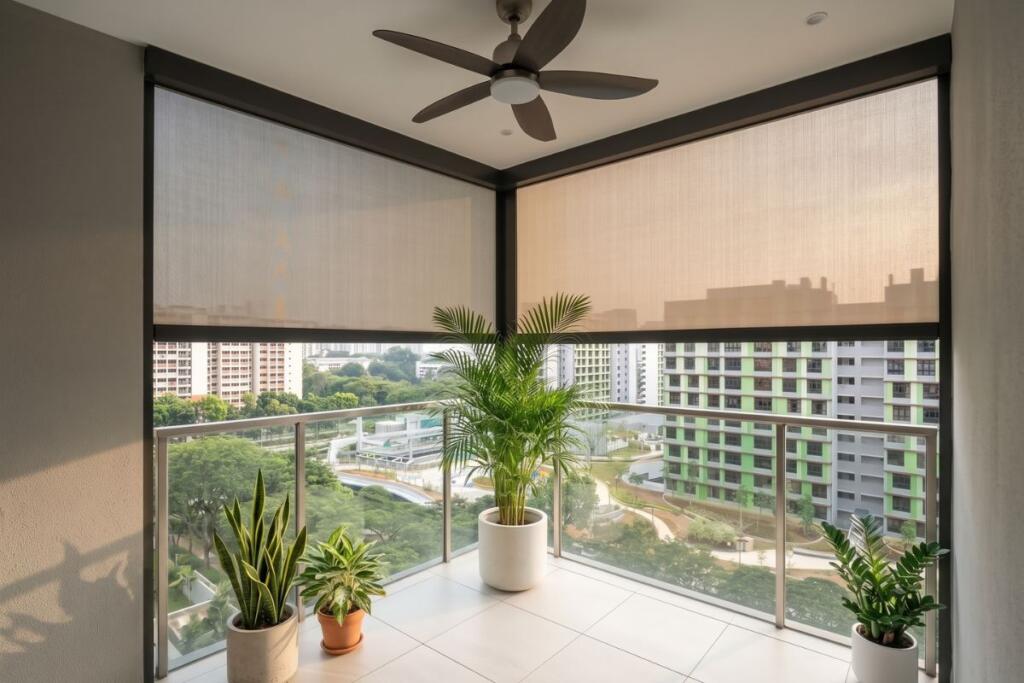
For balconies, patios and yards where the main concern is shade and daytime privacy, Outdoor Blinds can provide a practical solution without completely enclosing the space.
Cornerstone 317 offers both manual and motorised options.
Where you need a more guided outdoor screen, Zipscreen uses side tracks to keep the fabric held more securely along the edges. Manual, crank and motorised operating systems are available depending on the opening and how you prefer to use it.
It is important not to treat an outdoor blind and Zipscreen as the same product.
A conventional Outdoor Blind is primarily about shade, glare and daytime privacy. Zipscreen’s track-guided construction provides greater control around the sides of the screen and is designed for more demanding outdoor applications.
For HDB balconies, homeowners should also check the requirements that apply to their particular flat before proceeding with an outdoor installation. HDB’s current window works guidelines include specific conditions for blinds installed at certain open balconies, including requirements relating to ventilation, permeability, retraction and the unit boundary.
For condominiums, check your MCST’s requirements as well, as estate rules can differ.
Fabric and Colour Matter — But Not in Isolation
It is tempting to start with colour.
And colour certainly matters.
A warm neutral can make a room feel softer. A deeper shade can add contrast. A subtle texture may bring character to an otherwise simple interior.
But the way a fabric performs is just as important as the way it looks.
Consider its light transmission, privacy and how much outward visibility you want to retain.
A Sunscreen fabric, for example, can maintain a connection with the outdoors during the day while filtering glare. But daytime privacy should not automatically be treated as nighttime privacy — once the room is illuminated after dark, visibility conditions change.
A Blackout or stronger Dimout fabric provides greater coverage, but naturally reduces more daylight and outward visibility when lowered.
There is no universal “best” fabric.
There is only the one that makes sense for your room.
When choosing a colour, look beyond the blind itself too. Wall paint, flooring, window frames, carpentry, sofas and curtains all affect how the finished blind sits within the space.
The best choice often feels less like a new addition and more like something that was always meant to be there.
Why Proper Measurement Matters
Good fabric cannot rescue a poorly measured blind.
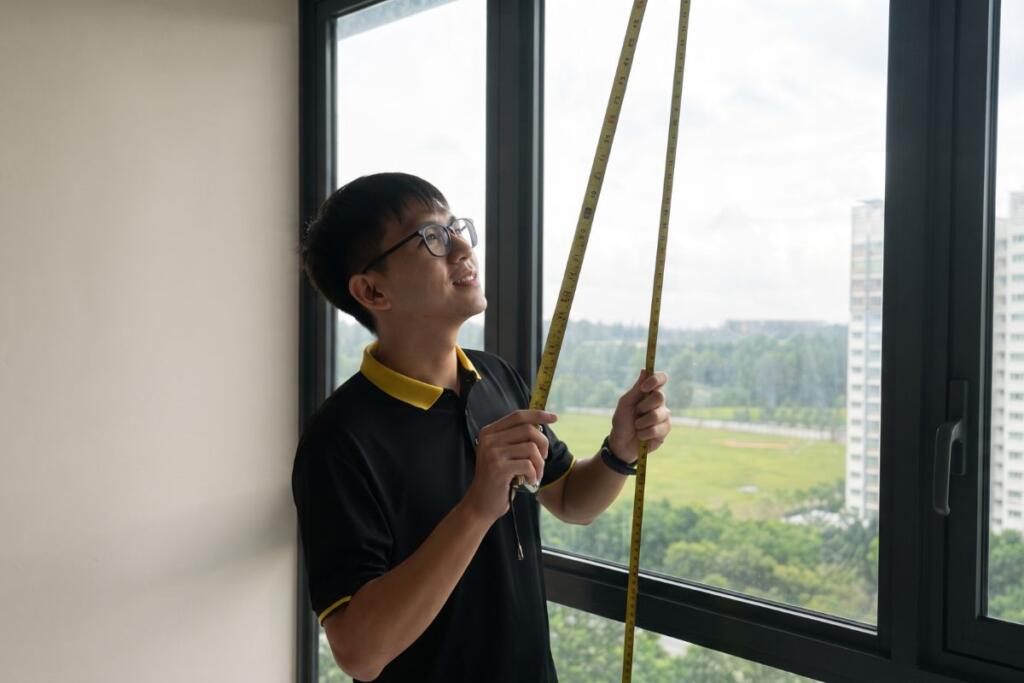
Windows and recesses are not always perfectly square. Handles can sit in unexpected places. Built-in cabinetry may limit where brackets can go. Larger openings may need to be divided differently to keep the finished installation practical and balanced.
That is why measurement is more than recording width and height.
A proper site assessment helps determine where the blind should sit, what clearance is available, how the system will operate and whether another window furnishing might actually suit the opening better.
It also gives you a chance to look at fabric samples in the room itself.
A colour that looks warm under showroom lighting can feel quite different beside your flooring and walls at home.
Small decisions made before fabrication can prevent much larger compromises afterwards.
One Home Does Not Need One Type of Blind
There is no rule saying every window in your home needs the same treatment.
Your living room might benefit from Sunscreen Roller Blinds.
The bedrooms may need Blackout Roller Blinds or Curtains.
A dining area could suit Wood Venetian Blinds.
And the balcony may call for an Outdoor Blind or Zipscreen.
What matters is that the different choices still feel connected through colour, texture and the overall character of the home.
Cornerstone 317 works across HDB, condominium and landed homes in Singapore, with curtains, interior blinds and outdoor shading systems measured and fitted according to the space.
If you are comparing several options, our FAQ also covers common questions about choosing, measuring, installation, warranty and after-sales support.
Finding the Right Fit
Before deciding, stand in the room when the sunlight is at its strongest.
Notice where it lands.
Look towards the neighbouring windows.
Sit where you normally sit.
Think about what you would like to change — less glare, more privacy, a darker bedroom, a softer living room or simply a window that feels more complete.
When comparing custom window blinds Singapore homes can accommodate, start with the room rather than the product. Light, privacy, window size and everyday habits will usually point you towards the right solution. Then choose from there.
The right window furnishing does not need to call attention to itself.
It simply needs to make everyday life at home a little more comfortable — fitted with care, and made to belong.
If you are unsure where to begin, send us a photo of your window. Tell us what you are hoping to improve, and we’ll help you work through the options without making the decision more complicated than it needs to be.